
If you’ve been feeling exhausted for no clear reason, gaining or losing weight despite no changes to your diet, experiencing mood swings, or dealing with irregular periods, your thyroid might be trying to tell you something.
Thyroid disorders are incredibly common—especially in women, who are 5-8 times more likely than men to develop thyroid problems. An estimated 1 in 8 women will develop a thyroid condition at some point in their lives, yet many go undiagnosed for years because symptoms can be subtle or easily attributed to stress, aging, or other health issues.
Here’s what you need to know about thyroid health, the most common thyroid conditions in women, symptoms to watch for, and when to see a doctor.
What Does Your Thyroid Actually Do?
Your thyroid is a small, butterfly-shaped gland located at the front of your neck, just below your Adam’s apple. Despite its small size, it has a massive impact on your overall health.
The thyroid produces two primary hormones—T3 (triiodothyronine) and T4 (thyroxine)—that regulate your body’s metabolism. This means they control:
How fast you burn calories and whether you gain or lose weight
Your heart rate and blood pressure
Body temperature regulation
Energy levels and how quickly your body uses energy
Digestive function
Muscle control and brain development
Menstrual cycles and fertility
When your thyroid produces too much hormone (hyperthyroidism) or too little (hypothyroidism), virtually every system in your body can be affected—which is why symptoms can be so varied and sometimes confusing.
Why Women Are More Susceptible
Women are significantly more likely than men to develop thyroid disorders, particularly:
During or after pregnancy (postpartum thyroiditis affects about 5-10% of women)
During perimenopause and menopause
If there’s a family history of thyroid disease
If you have another autoimmune condition (like Type 1 diabetes, rheumatoid arthritis, or celiac disease)
If you’ve had thyroid surgery or radiation treatment to your neck
The exact reason women are more vulnerable isn’t completely understood, but it’s likely related to hormonal fluctuations throughout life (menstruation, pregnancy, menopause) and higher rates of autoimmune diseases in women.
Hypothyroidism: When Your Thyroid Is Underactive
Hypothyroidism occurs when your thyroid doesn’t produce enough thyroid hormone. This is the most common thyroid disorder, affecting about 5% of the general population, with women being significantly more affected.
Most common cause: Hashimoto’s thyroiditis, an autoimmune condition where your immune system attacks your thyroid gland
Symptoms of hypothyroidism:
Fatigue and exhaustion that doesn’t improve with rest
Unexplained weight gain or difficulty losing weight despite diet and exercise
Feeling cold all the time, even when others are comfortable
Dry skin and brittle hair that breaks easily; hair loss
Constipation and sluggish digestion
Depression, brain fog, or difficulty concentrating
Muscle weakness, joint pain, or stiffness
Puffy face, especially around the eyes
Hoarse voice
Heavy, irregular, or prolonged menstrual periods
Fertility issues or difficulty getting pregnant
Slow heart rate
These symptoms typically develop slowly over months or years, which is why many women don’t realize something is wrong—they just feel progressively worse and assume it’s stress, aging, or just being busy.
Hyperthyroidism: When Your Thyroid Is Overactive
Hyperthyroidism is less common than hypothyroidism but still affects about 1% of the population, with women being more susceptible.
Most common cause: Graves’ disease, another autoimmune condition where antibodies cause the thyroid to produce too much hormone
Symptoms of hyperthyroidism:
Unexplained weight loss despite increased appetite
Rapid or irregular heartbeat, palpitations, or feeling like your heart is racing
Nervousness, anxiety, or irritability
Trembling hands or shakiness
Increased sweating and heat intolerance
Difficulty sleeping or insomnia
Frequent bowel movements or diarrhea
Muscle weakness, especially in the thighs and upper arms
Light or absent menstrual periods
Thinning hair
Bulging eyes (in Graves’ disease specifically)
Other Thyroid Conditions to Know About
Thyroid Nodules
Thyroid nodules are lumps or growths in the thyroid gland. They’re extremely common—about half of all people have at least one thyroid nodule by age 60. The vast majority (over 90%) are benign (not cancerous). Most cause no symptoms and are discovered during routine physical exams or imaging tests for other reasons. However, larger nodules can cause difficulty swallowing, breathing problems, or visible swelling in the neck. Some nodules produce excess thyroid hormone, causing hyperthyroidism symptoms.
Thyroiditis
Thyroiditis is inflammation of the thyroid gland. It can cause temporary hyperthyroidism followed by hypothyroidism as the inflamed gland releases stored hormone, then becomes unable to produce enough. Postpartum thyroiditis affects 5-10% of women within the first year after giving birth. Symptoms include neck pain or tenderness, and symptoms that fluctuate between hyper and hypo.
Goiter
A goiter is an enlarged thyroid gland, visible as swelling at the base of the neck. Historically, goiters were caused by iodine deficiency, but since iodized salt became common, this is rare in developed countries. Today, goiters are usually caused by Hashimoto’s or Graves’ disease. Large goiters can cause difficulty swallowing or breathing.
Thyroid Cancer
Thyroid cancer is relatively rare but has been increasing in diagnosis (possibly due to better detection). The good news is that most thyroid cancers are highly treatable and have excellent survival rates when caught early. Symptoms include a lump in the neck, difficulty swallowing, hoarseness, or swollen lymph nodes. Women are three times more likely than men to develop thyroid cancer.
How Thyroid Problems Affect Women’s Reproductive Health
Thyroid hormones play a critical role in reproductive health, which is why thyroid disorders can significantly impact:
Menstrual cycles: Hypothyroidism can cause heavy, prolonged periods, while hyperthyroidism often causes light or absent periods.
Fertility: Both hypo and hyperthyroidism can interfere with ovulation, making it harder to conceive.
Pregnancy: Untreated thyroid disorders increase the risk of miscarriage, preterm birth, preeclampsia, and developmental issues in the baby. Thyroid levels should be monitored closely during pregnancy.
Early menopause: Thyroid disorders, particularly autoimmune thyroid disease, are associated with earlier onset of menopause.
When to See a Doctor
You should see your doctor if you experience:
Multiple symptoms of hypo or hyperthyroidism that persist for weeks
Unexplained weight changes (gain or loss) despite normal eating and activity
Severe fatigue that interferes with daily life
Significant changes in your menstrual cycle
Difficulty getting pregnant
A visible lump or swelling in your neck
Rapid or irregular heartbeat
Family history of thyroid disease (you should get screened even without symptoms)
How Thyroid Disorders Are Diagnosed
Diagnosing thyroid problems is straightforward and typically involves:
Blood tests: TSH (thyroid-stimulating hormone) is usually tested first. If abnormal, T3 and T4 levels are measured. Thyroid antibody tests can diagnose autoimmune conditions like Hashimoto’s or Graves’ disease.
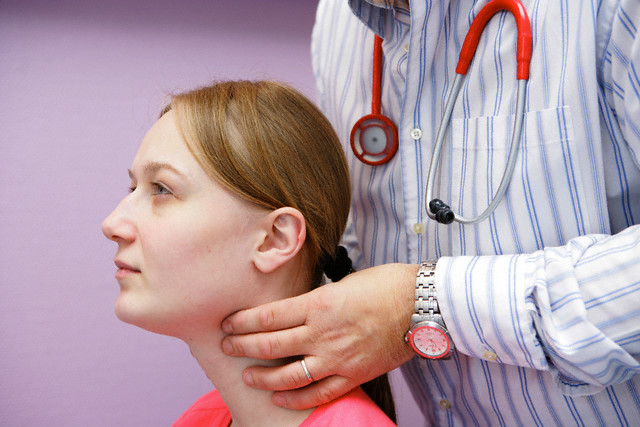
Physical exam: Your doctor will feel your neck for enlargement or nodules.
Ultrasound: If nodules are suspected, imaging can evaluate size and characteristics.
Biopsy: If a nodule looks suspicious, a fine-needle aspiration can determine if it’s cancerous.
Radioactive iodine uptake test: Measures how much iodine your thyroid absorbs, helping determine the cause of hyperthyroidism.
Treatment Options
Treatment depends on the specific condition:
Hypothyroidism: Daily thyroid hormone replacement medication (levothyroxine). This is typically lifelong but very effective once the correct dose is established.
Hyperthyroidism: Options include anti-thyroid medications, radioactive iodine treatment (which destroys overactive thyroid tissue), or surgery. Treatment choice depends on severity and cause.
Thyroid nodules: Most require only monitoring. Cancerous or problematic nodules may need surgery.
Thyroid cancer: Surgery to remove all or part of the thyroid, possibly followed by radioactive iodine treatment.
Keep Smiling
Thyroid disorders are common, especially in women, but they’re also highly treatable once properly diagnosed. The key is recognizing symptoms and getting tested rather than assuming you’re just stressed, tired, or getting older.
If you’ve been experiencing persistent fatigue, unexplained weight changes, menstrual irregularities, mood changes, or any other symptoms mentioned in this guide, talk to your doctor about thyroid testing. A simple blood test can provide answers and potentially change how you feel dramatically.
Many women live for years with undiagnosed thyroid issues, attributing their symptoms to being busy, stressed, or just part of getting older. You deserve to feel your best, and proper thyroid treatment can genuinely transform your energy, mood, weight, and overall quality of life.