
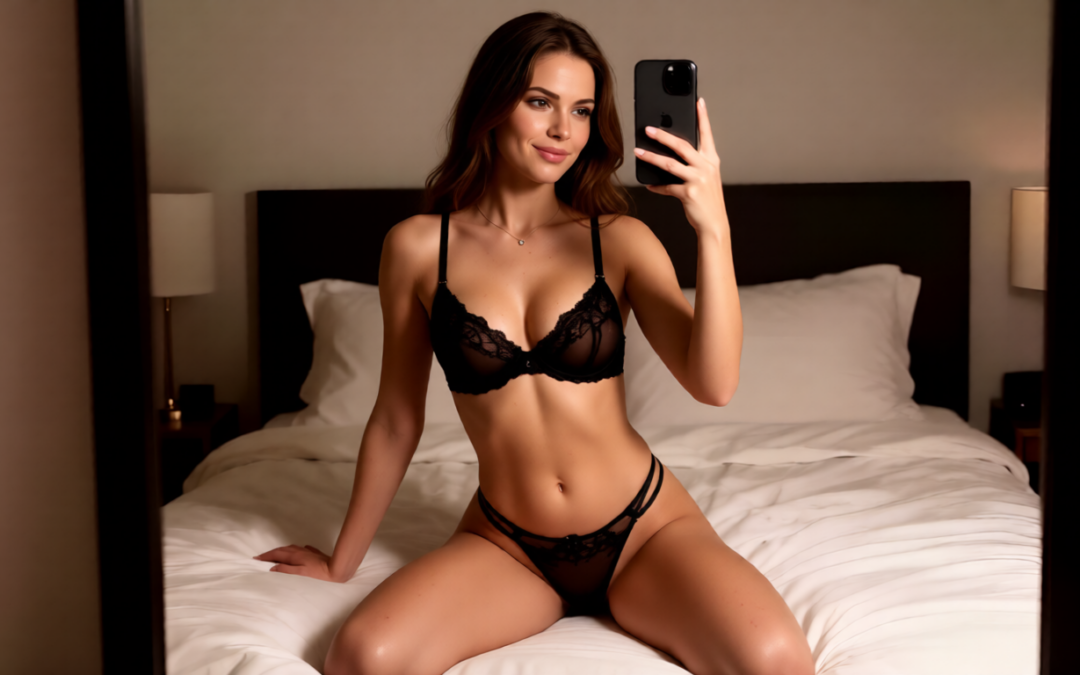
There are many reasons you might need to know how to take sexy selfies. Maybe you want to see yourself as beautiful and sexual. Maybe you’re creating a gift for a partner. Maybe it’s artistic self-expression, or just curiosity about how your body looks from angles you can’t normally see.
Whatever your reason, taking sexy selfies of yourself can be empowering, confidence-building, and deeply personal. It can also be vulnerable and risky if you don’t approach it thoughtfully.
This article covers why women take intimate photos, how to take sexy selfies that make you feel beautiful, and the critical safety considerations you need to understand before you click the shutter.
Why You Might Take Sexy Selfies
Seeing Yourself Differently
Most of the time, you see yourself in mirrors or quick phone glances. Intimate photography lets you see your body from new angles, in different lighting, and in intentional compositions. Many women discover they’re more beautiful than they realized when they see themselves as art rather than just a body they live in.
Building Confidence
There’s something powerful about looking at a photo of yourself and thinking, “I look good.” When you control the lighting, angle, and moment, you can capture yourself at your most confident and attractive. Over time, this changes how you see yourself even outside the photos.
Celebrating Your Body
Your body changes over time. Taking sexy selfies can be a way to document and celebrate where you are right now—whether that’s after weight loss, before or after pregnancy, at a moment when you feel particularly strong or sexy, or just because you exist in this body and want to honor it.
Artistic Expression
Photography is art, and your body is a legitimate subject. Creating sexy selfies of yourself can be about composition, light, shadow, and form. It’s not always sexual—sometimes it’s just beautiful.
For a Partner
Creating sexy selfies as a gift for someone you trust can be thrilling. The anticipation of their reaction, the intimacy of sharing yourself this way, the confidence of knowing you look good—these are all reasons women choose to create intimate images for partners.
Reclaiming Your Sexuality
If you’ve felt disconnected from your body or sexuality, intimate photography can help you reconnect. Seeing yourself as sexual and desirable—not for anyone else’s approval but for your own recognition—can be profoundly healing.
Before You Start: Understanding the Risks
Let’s be direct about this: sexy selfies can be shared without your consent. This is a real risk, and you need to understand it before you create any image.
The Uncomfortable Truth
If an intimate photo is stored digitally, it can be viewed by people you didn’t intend to see it. This includes:
- Partners who become ex-partners and feel hurt or vengeful
- Phones that get hacked, lost, or stolen
- Cloud storage that gets compromised
- Friends or family who borrow devices
- Future employers or professional contacts who search for you
“Revenge porn”—sharing intimate images without consent—is illegal in many places, but that doesn’t prevent it from happening. It can cause real harm: emotional distress, damaged relationships, professional consequences, and harassment.
Making an Informed Choice
Understanding these risks doesn’t mean you shouldn’t take sexy selfies. It means you should make an informed choice about:
- Whether to include your face or identifying features
- Who, if anyone, do you share images with
- How you store images
- What level of risk are you comfortable with
You might decide the confidence and joy you get from intimate photography is worth the carefully managed risk. Others decide it’s not worth it for them. Both choices are valid.
If you do choose to create sexy selfies, the safety guidelines later in this article are essential.
How to Take Sexy Selfies – Specifically
Creating intimate photos that make you feel beautiful isn’t just about clicking a button. Here’s what actually makes the difference.
Lighting Is Everything
Good lighting can make you look soft, glowing, and beautiful. Bad lighting makes everyone look harsh and unflattering.
Natural Light Works Best
Position yourself near a window with indirect light—not harsh direct sunlight. Early-morning or late-afternoon light is particularly flattering. The soft glow makes skin look smooth and creates gentle shadows that define your body.
If you’re taking photos at night, avoid overhead lights. They create unflattering shadows under your eyes and emphasize every imperfection. Instead, use a lamp positioned to the side, or use screen lighting if needed.
Avoid Flash
Phone or camera flash typically makes skin look washed out and creates harsh shadows. If you can’t get good natural or ambient light, it’s better to wait for a different time than to use flash.
Angles That Flatter
The angle of your camera changes how your body appears.
From Slightly Above
Positioning the camera slightly above eye level typically flatters most people. It elongates your neck, defines your jawline, and creates a more engaging perspective. This doesn’t mean extreme angles—just a few inches higher than straight-on makes a difference.
Experiment with Distance
Close-up shots show detail and intimacy. Full-body shots show your overall form and create context. Medium shots (chest to thighs, for example) can be incredibly beautiful. Try different distances to see what you like.
Use a Mirror Strategically
Mirror shots can work beautifully, especially full-length mirrors that show your whole body. The key is to clean the mirror first (you’d be surprised how many good photos are ruined by visible smudges) and to be mindful of what’s visible in the background.
Composition and Background
What’s behind you matters almost as much as you do.
Keep It Simple
A cluttered background distracts from you. A clean bed with white or neutral sheets, a plain wall, a simple bathroom—these work because they don’t compete for attention. You can also use shallow depth of field (portrait mode on phones) to blur the background and keep focus on you.
Consider Context
Sometimes context adds to the photo. Lying in bed with rumpled sheets suggests intimacy. Standing in a doorway creates natural framing. Sitting in a chair with one leg crossed over the other creates elegant lines. Think about what story the context tells.
Your Body and Expression
Posing Feels Awkward at First
Taking sexy selfies means posing your body intentionally, and that feels weird when you’re alone. Everyone feels awkward at first. Take a lot of photos. Delete the ones you don’t like. You’ll find poses that feel natural to you.
Small Adjustments Matter
Arching your back slightly, pointing your toes, turning your body at an angle rather than facing straight on, and tilting your head—these small adjustments create more flattering lines and shapes.
Your Expression Tells the Story
Looking directly at the camera creates a sense of intimacy and connection. Looking away can be sultry or contemplative. Eyes closed can be peaceful or sensual. A slight smile versus a serious expression changes the entire mood. Experiment with what feels authentic to you.
Movement Can Help
Instead of holding perfectly still, try taking photos while moving slightly. Run your hands through your hair. Shift your weight from one leg to another. Lie down and roll onto your side. Movement creates natural, less posed-looking images.
Technical Setup
Using Your Phone
Your phone is perfectly capable of taking beautiful, sexy selfies. Use the self-timer rather than holding the phone at arm’s length. Most phones have a 3-second or 10-second timer option. Position your phone, set the timer, get into position, and let it capture automatically.
If you’re taking multiple photos, use burst mode. Take dozens of shots in a session, then go through and keep only the ones you love.
Tripod or Improvised Stand
A small phone tripod costs less than $15 and makes everything easier. If you don’t have one, you can prop your phone against books, a water bottle, or any stable surface. Just make sure it’s secure and won’t fall.
Camera Settings
With your phone, use portrait mode (if available) to create a professional blurred background effect. Note: If using a manual camera, a larger aperture (lower f-number, such as f/2.8) produces the same effect.
Editing Your Photos
Taking the photo is only half the process. Most women edit their photos before keeping or sharing them, and there’s nothing wrong with that. The key is knowing what helps and what makes photos look fake or over-processed.
Basic Adjustments That Help
Brightness and Exposure
If your photo is too dark, increasing the brightness can help. But be careful—too much brightness washes you out and looks unnatural. Make small adjustments until the photo looks like how you appeared in good lighting, not like you’re glowing.
Contrast
Adding a bit of contrast makes your body look more defined and your skin more vibrant. This is one of the most universally flattering adjustments. Again, subtle is better than extreme.
Warmth and Color Temperature
Adjusting the “warmth” or “temperature” of a photo can make your skin tone more flattering. Slightly warmer (more yellow/orange) typically looks better on skin than cooler (blue) tones. But don’t go so warm that you look orange.
Cropping
Sometimes the photo you took isn’t quite the right composition. Cropping lets you reframe, remove distracting elements from edges, or change the aspect ratio. This is one of the most powerful editing tools and doesn’t change how you actually look.
Soft Focus and Skin Smoothing
Most editing apps have tools to smooth skin or add a slight blur/soft focus effect. Used subtly, these can make your skin look flawless without looking fake. The keyword is “subtly”—you should still look like yourself, just with better skin.
Recommended Editing Apps
Snapseed (Free)
Powerful and intuitive. Has all the basic adjustments plus advanced tools. Great for beginners and experienced editors alike. Works on both iPhone and Android.
Lightroom Mobile (Free with premium option)
Professional-grade editing in a mobile app. Steeper learning curve, but produces beautiful results. The free version is more than sufficient for most people.
Facetune (Paid)
Specifically designed for editing selfies and body photos. Has tools for smoothing skin, whitening teeth, reshaping body parts, and more. Easy to use, but also easy to overuse.
Native Phone Editors
Both iPhone and Android have built-in photo editors that are surprisingly capable. If you’re only adjusting brightness, contrast, and cropping, you might not need a separate app.
How to Take Sexy Selfies that Work vs. What Looks Fake
Subtle Edits Look Real
If you make an adjustment and can clearly see the difference, you’ve probably gone too far. Good editing should make you look like yourself on your best day, not like a different person.
The Uncanny Valley
Over-smoothed skin, dramatically reshaped body parts, or extreme filters can create the “uncanny valley” effect, where something looks wrong even if you can’t immediately identify what. If your photo starts to look like a video game character or plastic doll, pull back on the editing.
Consistency Matters
If you’re sending photos to someone you’ll see in person, editing yourself to look dramatically different creates problems. You want to look like an enhanced version of yourself, not a completely different person.
Critical Metadata Warning After Editing
Some editing apps automatically strip metadata from photos when you save them, which is good for privacy. Others preserve the original metadata, so your location and other information remain embedded.
Always check after editing:
Use a metadata viewer app or the same methods mentioned in the safety section to verify that your edited photo doesn’t contain location data or other identifying information.
Don’t assume that editing a photo has removed metadata. Verify every time.
The Authenticity Balance
Editing for Confidence
If editing your photos helps you feel more confident and beautiful, that’s valuable. There’s nothing wrong with wanting to look your best in photos.
The Reality Check
If you’re sending photos to someone you’re in a relationship with or will meet in person, remember that they’re going to see the real you. Editing should enhance, not catfish.
If you find yourself spending hours editing every photo or feeling like your unedited self isn’t acceptable, that might be worth examining. Photos are meant to capture you, not create a fictional version of you.
What’s Worth Editing:
Lighting issues, exposure problems, and unflattering shadows—these are technical problems that editing fixes legitimately.
What’s Not:
Dramatically reshaping your body, changing your facial structure, or erasing all natural texture and imperfections creates images that aren’t you anymore.
Advanced Enhancement
For those interested in more detailed editing techniques and professional-level photo enhancement, our member content offers comprehensive tutorials on advanced editing, body-shaping techniques, professional retouching, and creating portfolio-quality images from your phone.
Preparing Yourself
Grooming
If you want to feel your most confident in how to take sexy selfies, grooming your body the way you prefer can help. This might mean shaving, waxing, trimming, or leaving everything natural—whatever makes you feel most comfortable and beautiful. For detailed guidance on grooming your Lady, you can read our article on caring for your Lady.
Timing Matters
Take photos when you feel good about yourself. Not right after waking up with pillow marks on your face. Not when you’re bloated or stressed. Choose a time when you feel attractive and confident—that energy shows in photos.
What to Wear (Or Not Wear)
SExy selfies don’t have to be fully nude. Lingerie, a partially unbuttoned shirt, a sheet artfully draped—these can be just as sensual and often feel less vulnerable. Start with whatever level of undress feels comfortable and work up to more if you want.
Critical Safety Guidelines
If you’re going to take intimate photos, these safety rules are non-negotiable.
Metadata and Location Data
Photos contain hidden information called metadata. This can include:
- The date and time you took the photo
- GPS coordinates showing exactly where you took it
- What device did you used
- Sometimes, even your name
Before sharing any photo, you need to remove this metadata.
How to remove it:
- Most photo editing apps have an option to strip metadata
- On iPhone: Take a screenshot of the photo instead of sharing the original (screenshots don’t contain metadata)
- Use dedicated apps like “Metapho” or “Photo Investigator.”
- Never share directly from your camera roll without stripping metadata first
Secure Storage
Your phone’s camera roll is not secure. Anyone who picks up your unlocked phone can see those photos. Here are better options:
Use a Private Photo Vault App: Apps like “Keepsafe” or “Private Photo Vault” let you store photos behind a separate password. They don’t show up in your regular camera roll.
Keep Them Off Your Phone Entirely: Transfer photos to a password-protected computer or external drive, then delete them from your phone.
Never Use Cloud Storage You Share: If your iCloud or Google Photos syncs to other devices (iPad, laptop, family computer), your intimate photos are on all those devices. Turn off auto-sync for your camera roll, or don’t store intimate photos in the cloud at all.
Who to Trust (and When Not to Trust)
Early Relationships: If you’re newly dating someone, seriously consider whether you trust them enough to have intimate photos of you. Even if they seem trustworthy now, you can’t predict how they’ll behave if the relationship ends badly.
Include Your Face with Extreme Caution: Photos without your face and identifying features (tattoos, unique birthmarks, identifiable backgrounds) are harder to trace back to you. If a photo contains your face, it can be shared in ways that directly affect your life.
Never Let Someone Pressure You: If someone is pushing you to send photos, that pressure itself is a red flag. Trustworthy partners don’t pressure. They respect your boundaries and timeline.
If You Share Photos
Use Disappearing Messages: Apps like Signal and Snapchat offer features that allow photos to disappear after being viewed. These aren’t foolproof (people can take screenshots), but they’re safer than regular texting.
Watermark for Protection: Some women add a discreet watermark with the recipient’s name. This makes it clear who would be responsible if the photo is shared. It’s not foolproof, but it’s a deterrent.
Have the Conversation: Before sending intimate photos to anyone, have an explicit conversation about consent and expectations. Make it clear that sharing them without your permission constitutes a violation of trust and may be illegal.
The Confidence That Comes From This
When you take sexy selfies, and you see images where you look beautiful—really beautiful—it changes something. You start to see yourself differently.
You catch a glimpse of yourself in the mirror and remember how you looked in that photo. You feel more confident getting undressed with a partner because you know your body can look stunning. You carry yourself differently because you’ve seen evidence that you’re attractive.
This isn’t about validation from others. It’s about seeing yourself as the beautiful, sexual, powerful person you are. Intimate photography can be a tool for that self-recognition.
Keep Smiling
Knowing how to take sexy selfies of yourself is a personal choice that can build confidence, create art, and help you see your body in a new light. But it also requires thoughtful attention to safety and privacy.
If you choose to explore intimate photography, do it for yourself first. Do it with a clear understanding of the risks. Do it in ways that make you feel beautiful and powerful.
Your body is yours. The images you create of it are yours. How you choose to use them—whether that’s keeping them private for your own confidence, sharing them with someone you trust, or simply deleting them after admiring yourself—is entirely your decision.
Want to explore further?
For those interested in more detailed guidance on intimate photography, our member content offers:
- Advanced techniques for specific body areas and angles
- Detailed positioning and composition guides
- Exploring intimate photography as part of sensual self-discovery
And if you’re preparing your body for intimate photos, these articles might be helpful: